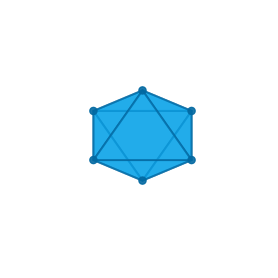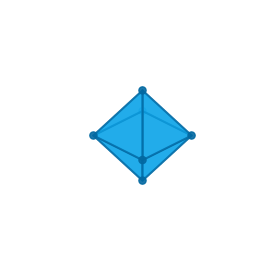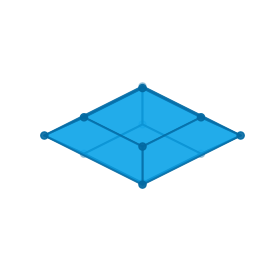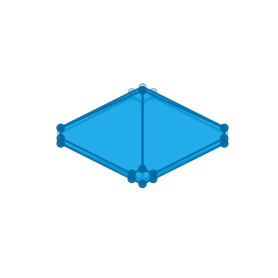
tetragonal Nesosilicates
Vesuvianite
Ca19(Al,Mg)13(SiO4)10(Si2O7)4(OH,F)10
Quick Facts
Hardness
6.5
Specific Gravity
3.32
Refractive Index
1.7
Optical Character
Uniaxial - (occasionally +)
Interactive Preview
Open this crystal in the CDL Playground to rotate, export, and explore in 3D.
Open in PlaygroundCrystal Structure
 #! Species: Vesuvianite (Idocrase)
#! System: Tetragonal (4/mmm)
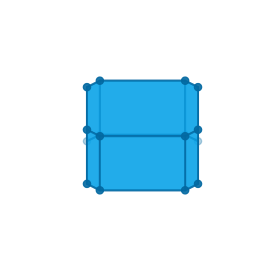
#! Habit: Prismatic with pinacoid
tetragonal[4/mmm]:{100}@1.0 + {110}@0.8 + {001}@0.6
tetragonal
4/mmm
{100} {110} {001}
Physical Properties
Crystal Systemtetragonal
Hardness (Mohs)6.5
Specific Gravity3.32
CleavagePoor {110}
FractureSubconchoidal to uneven
LustreVitreous to resinous
Optical Properties
Refractive Index1.7
Birefringence0.001-0.025
Optical CharacterUniaxial - (occasionally +)
Dispersion0.019
PleochroismWeak
Colours
Green (most common)Yellow-greenYellow-brownBrownBlue (cyprine - copper-bearing)Violet
Localities
Italy (Mount Vesuvius - type locality)Canada (Quebec, British Columbia)Russia (Ural Mountains)USA (California)KenyaPakistan
Common Inclusions
Colour zoningCrystal inclusions
Crystal Forms
tetragonal_prismpinacoid
Notes
Named by Werner in 1795 for crystals from Mount Vesuvius; gemologists often use the older name idocrase
Interactive Preview
Open this crystal in the CDL Playground to rotate, export, and explore in 3D.
Open in PlaygroundRelated Minerals
Other minerals in the tetragonal system